
Bird breeding numbers 2025
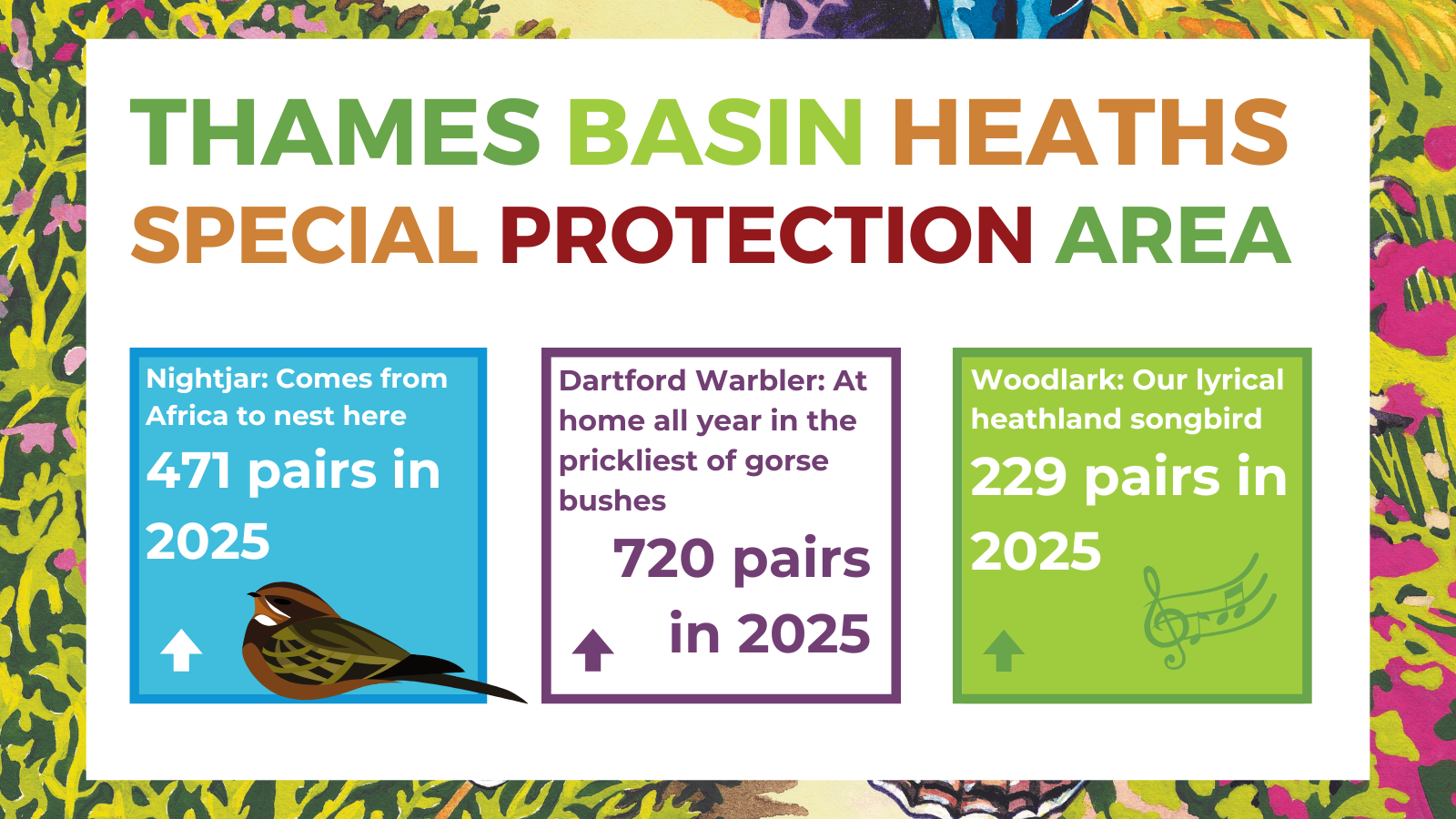
The Thames Basin Heaths Special Protection Area (SPA) was created to protect three species of threatened heathland birds, the Nightjar, Woodlark and Dartford Warbler. The numbers are monitored by a team of more than 30 experienced volunteers coordinated by 2Js Ecology and we’re pleased to bring you the 2025 results. This is the 23rd consecutive year 2Js Ecology have coordinated the survey, which is an incredible testament to their passion and dedication. We thank John Eyre and John Clark for their continued hard work.
2025 was a good year for Nightjar, with an estimated number of 471 territories. This is an increase of just over 11% on the total for 2024, and higher than each of the last three years. The fall in numbers during 2022 was attributed to a major heathland fire at Ash Ranges.
Dartford Warbler territories have increased by 22% since 2024, rising from 590 to 720 territories. It is reassuring to see this increase, as the numbers have exceeded their 2022 high of 702. Numbers fell to their lowest level since 2018 in 2023 when the population was hit by the bad weather during March 2023, known as the ‘Beast from the East’. Dartford Warbler are very weather dependent and the short spells of very cold weather during the 2023 winter are likely to account for that fall. But numbers continue to increase and if we continue to experience mild winters then we may see a further increase.
We are pleased to share that Woodlark numbers have seen an increase of 4% since 2024. Numbers declined from 2021 to 2023 which was almost certainly due to habitat availability, as Woodlark are very dependent on areas of low vegetation or bare ground. The 2024 total is higher than 2021 and shows yet another increase for 2025. Continued management of heathland habitats, to clear scrub and keep them in optimal condition, is vital.
The table below compares the 2025 totals with recent years, as well as the year of the relevant baseline survey. All three species are doing well when compared to the baseline:
| Bird species | No. of pairs at SPA notification (year) | No. of pairs in 2021 | No. of pairs in 2022 | No. of pairs in 2023 | No. of pairs in 2024 | No. of pairs in 2025 |
|---|---|---|---|---|---|---|
| Nightjar | 264 (1998-99) | 413 | 370 | 405 | 422 | 471 |
| Dartford Warbler | 445 (1999) | 553 | 702 | 437 | 590 | 720 |
| Woodlark | 149 (1997) | 196 | 192 | 169 | 220 | 229 |
What’s next?
Nature is complex, but factors that will help keep all three species on an upward trend include…
- Everyone continuing to help by keeping to main paths and keeping dogs out of vegetation, especially March to September
- Everyone continuing to help by preventing heathland fires
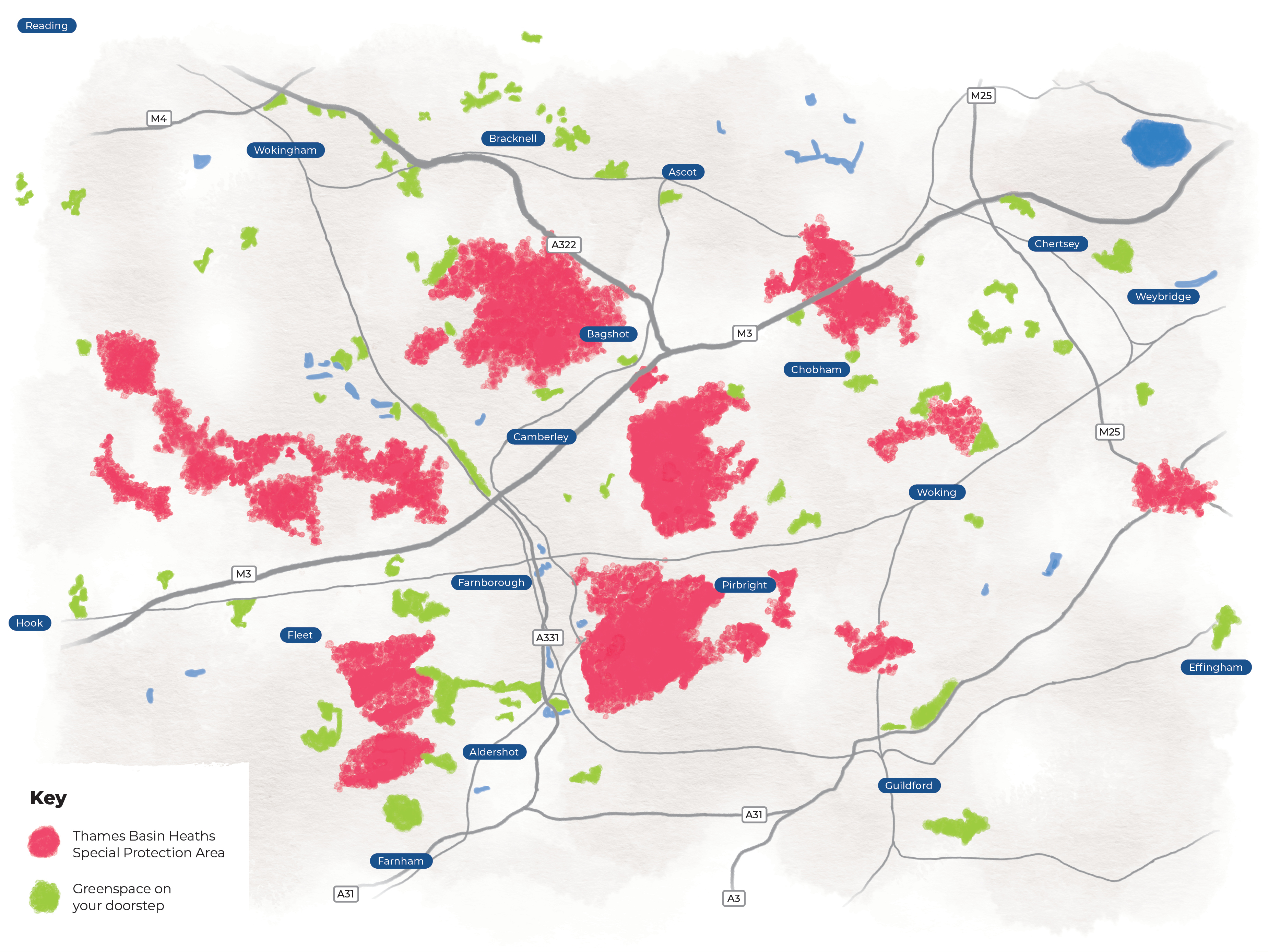
- Everyone continuing to help by discovering and using the places listed in ‘Greenspace on your doorstep’
- Everyone continuing to help by spreading the word
- Good weather, especially mild winter weather
- Continued brilliant work by land managers, keeping the habitats in tip top condition
What does it mean for you?
The Special Protection Area was setup to protect these rare breeding birds, but it does so much more than that. It protects the heathland habitat for all sorts of wonderful wildlife, and of course gives the landscape we love a huge amount of protection from inappropriate development.
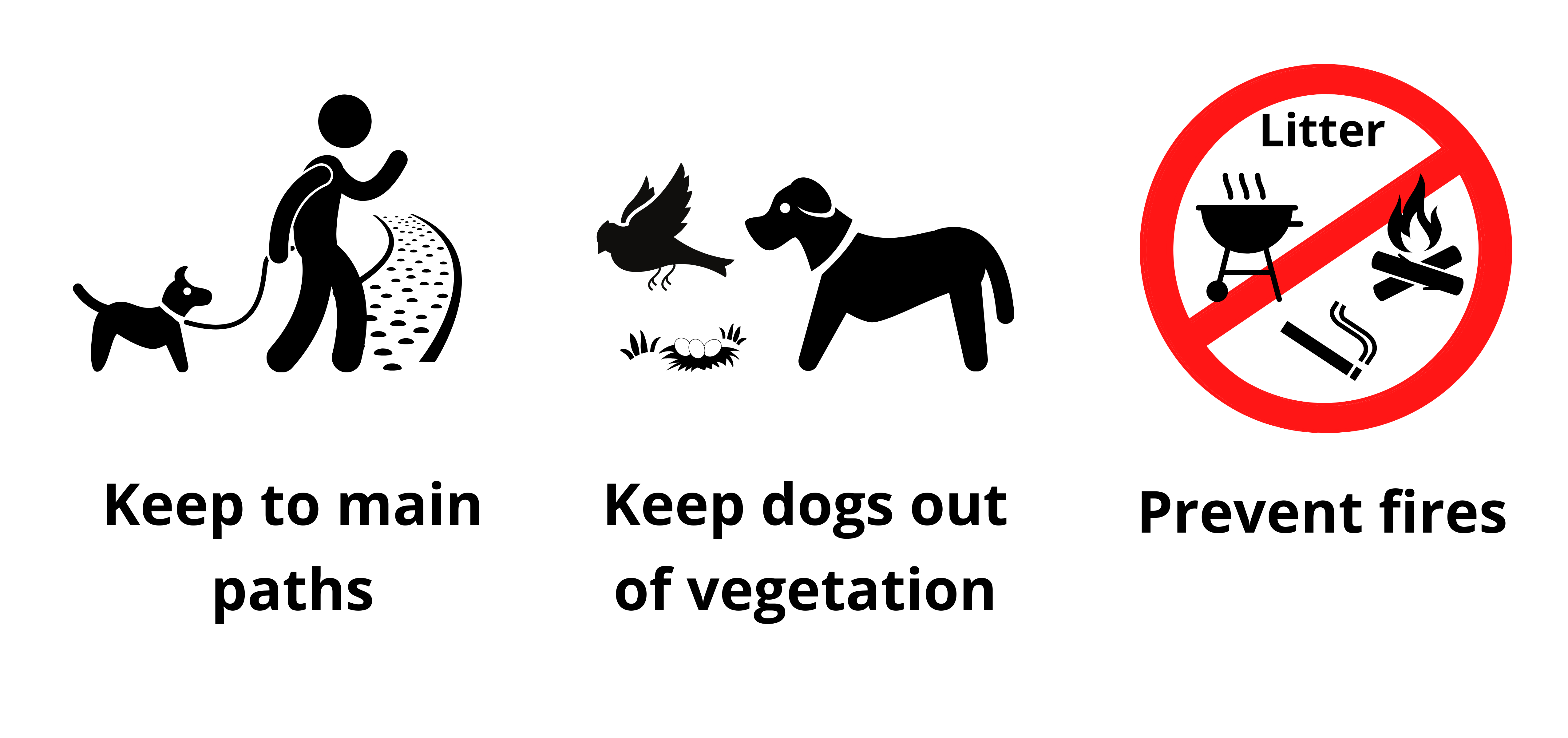
#PawsOnPathsPlease